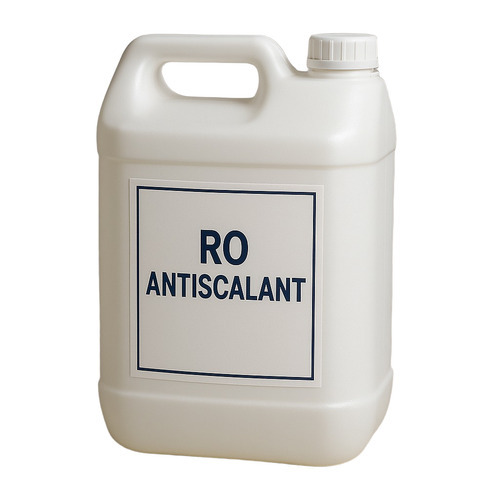
Reverse Osmosis (RO) antiscalant chemicals are specialized scale inhibitors injected into feed water upstream of RO and nanofiltration membranes to prevent mineral precipitation and fouling
What They Do
- Inhibit Crystallization: They interfere with crystal growth, threshold precipitation, and particle agglomeration (dispersion) so minerals stay dissolved in the reject stream rather than hardening on the membrane.
- Control Mineral Scales: They manage common and aggressive foulants, including calcium carbonate, calcium sulfate, barium sulfate, strontium sulfate, calcium fluoride, iron oxide, phosphate, and silica.
- Eliminate Acid Dosing: Proper antiscalant application often replaces or reduces the need to add hazardous acids to lower feed water pH.
Key Benefits
- Extends Membrane Life: Prevents physical clogging and abrasive damage, pushing cleaning intervals out from weeks to years.
- Higher Recovery Rates: Allows RO plants to run at higher water-recovery efficiencies even with low-quality or high-TDS feed water.
- Lower Operating Costs: Reduces downtime, chemical clean-in-place (CIP) frequency, and membrane replacement costs




 Send Inquiry


 Send Inquiry
